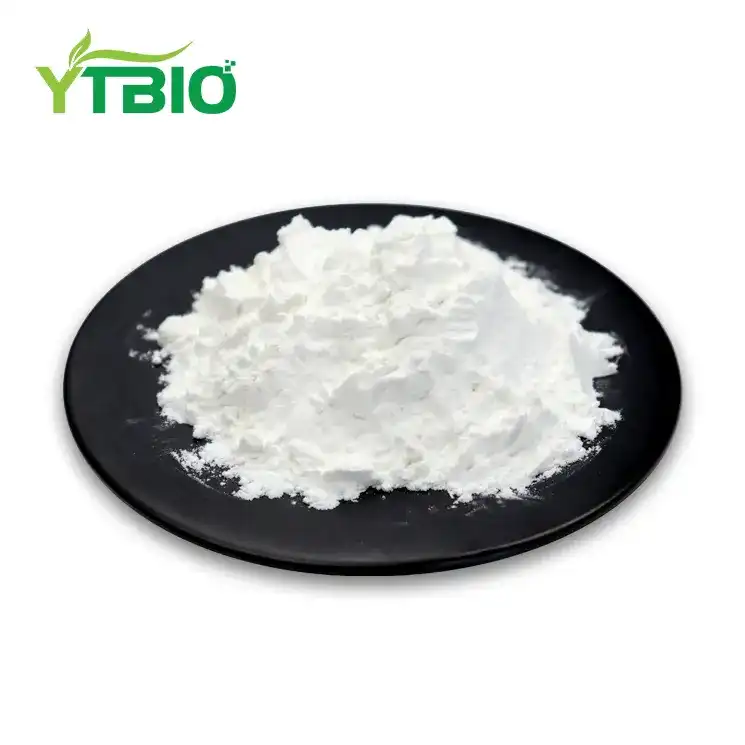
Curdlan powder
CAS:54724-00-4
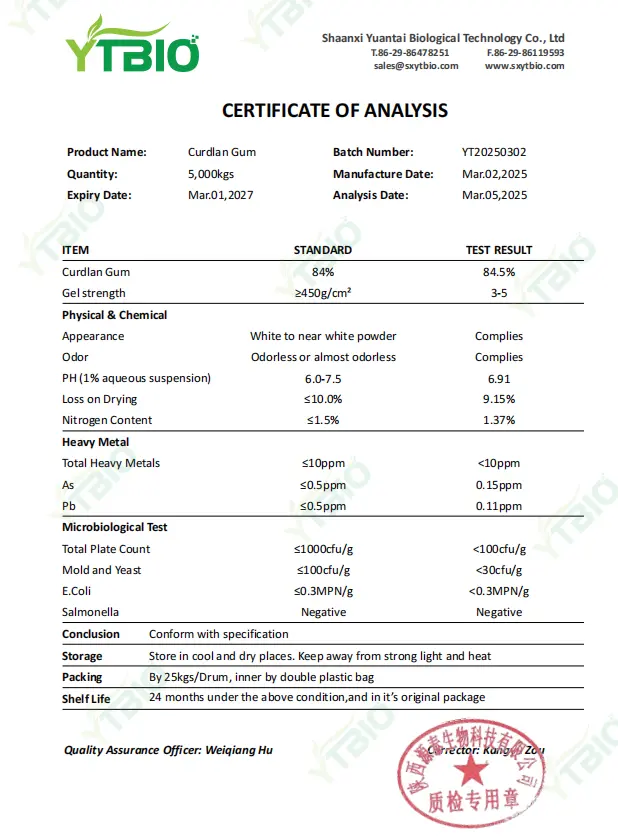
Purity: Curdlan Gum 84%
Gel strength:550g/cm²
Certification: ISO9001, ISO22000, Kosher, Halal, FSSC22000
Delivery speed: 3-5 days
Stock: Available in stock
MOQ:25KG
Payment: T/T, VISA, XTransfer, Alipay...
Shipping: DHL.FedEx, TNT, EMS, SF, Sea, Air
- Fast Delievery
- Quality Assurance
- 24/7 Customer Service
Product Introduction
What is Curdlan Powder?
Curdlan powder, a gel polysaccharide, is a polymer primarily produced by microbial fermentation. It consists of linear dextran composed of D-glucan residues linked by β-(1→3)-glycosidic bonds, and can form a gel under heating conditions. Curdlan exhibits gelling properties; its aqueous dispersion, when heated to 55-65°C and then cooled to below 40°C, forms a thermally reversible low-level gel; when heated above 80°C, it forms a thermally irreversible high-level gel. This gel remains insoluble even after cooling and reheating to 130°C, demonstrating excellent thermal stability. Furthermore, this component can form a gel with unchanged strength within a pH range of 2-10 and is stable to light, heat, and air.Currently, Curdlan is widely used in the food industry, such as in meat products, pasta products, and vegetarian products.
YTBIO supplies Curdlan with a purity of ≥84% and a gel strength of ≥550 g/cm², which can be used in the food industry and daily chemical products.
Product Specifications
Source
It is a class of molecules composed of polysaccharides that can form gel structures. They have rich biological activities and can be extracted from animals, plants and microorganisms. According to different sources, they can be divided into animal-based, plant-based and microbial-based gel polysaccharides.
Animal sources mainly come from animal connective tissues and internal organs, such as fish skin, sea cucumbers, and clam shells. Plant sources come from seeds, fruits, leaves and other parts of various plants, such as seaweed, xylan, etc. Microbial sources are synthesized by microorganisms, such as mycelium and extracellular polysaccharides. These curdlans have similar basic structures, but their biological activities and effects are different.
Basic Properties
Core Advantages: Dual Gel Properties
The core difference between Curdlan powder and other food colloids lies in its dual gel properties:
Low-Temperature Reversible: Heating the suspension to 55-65℃ and then cooling it below 40℃ forms a low-strength reversible gel. Reheating to above 60℃ restores it to a fluid state.
High-Temperature Irreversible: Heating above 80℃ forms a high-strength, highly elastic irreversible gel. It remains stable even after sterilization at 130℃ or repeated freeze-thaw cycles.
Key Properties
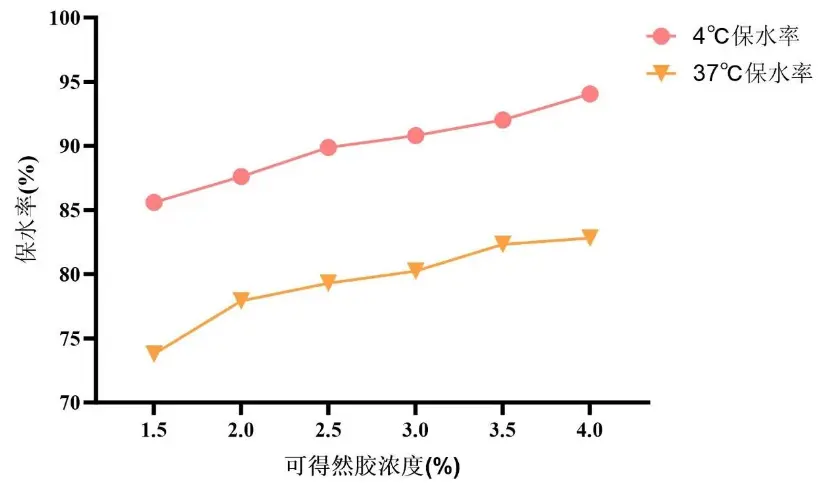
Water Retention: At 37℃, curdlan's water retention improves with increasing concentration. At concentrations of 1.5% and 2.0%, the gel is relatively weak, and its water retention is also weak. At a low temperature of 4℃, its overall water retention is better than at 37℃. Water retention at all concentrations is above 85%, and increases with increasing concentration.
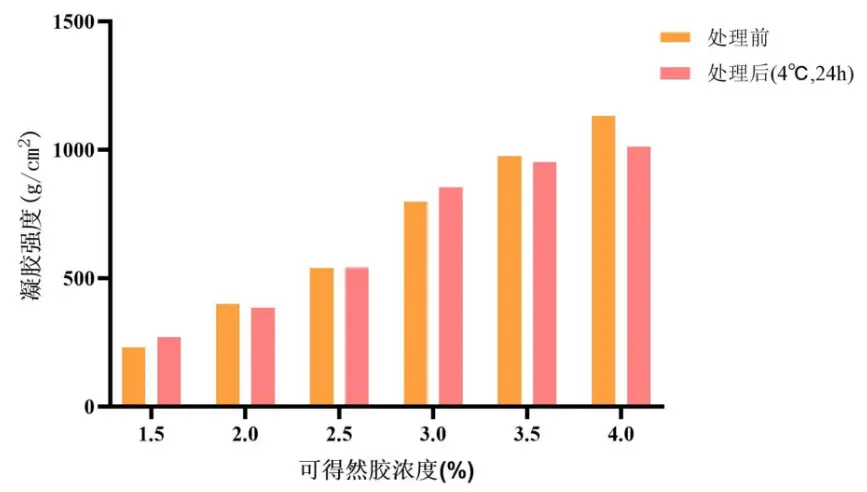
Thermal stability: After autoclaving at 121℃ for 30 minutes, gel strength showed almost no loss.
Freezing resistance: After being placed at 4℃ for 24 hours, the gel strength of Curdlan changed little, essentially maintaining its original strength, and in some cases even slightly exceeding it. The gel's toughness increased after standing, but water was released.
Protein synergy: Forms a dense three-dimensional network with myofibrillar proteins, enhancing protein gel strength.
Gel Properties of Curdlan
A curdlan suspension, when heated and cooled within the temperature range of 50-80°C, forms a low-strength gel. This gel is thermally reversible; reheating will cause it to revert to a sol. Heating the suspension above 80°C without cooling will directly form a gel; this is called a high-strength gel, which maintains a good gel state at high temperatures and will not revert to a liquid state even at 120°C, exhibiting thermal irreversibility.
Effect of Concentration on Properties
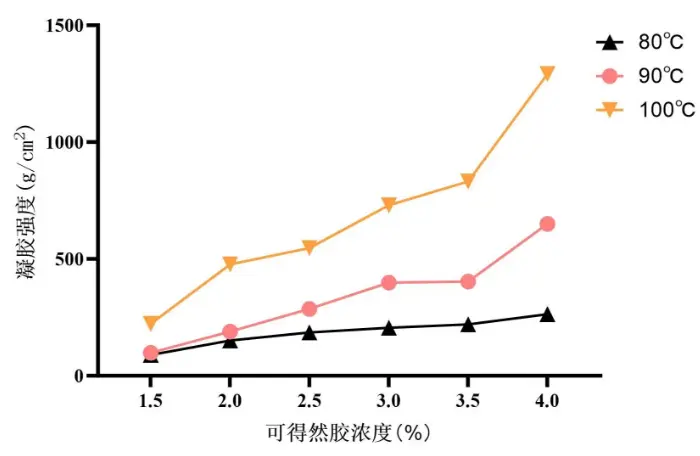
The concentration has a significant impact on gel strength. Too low a concentration of polysaccharide will not form a gel; gelation will only occur at a certain concentration, and the gel strength increases with increasing concentration.
Effect of Temperature on Properties
At 100°C, 90°C, and 80°C, the gel strength increases with increasing curdlan concentration. At the same concentration, higher temperatures result in higher gel strength. Higher temperatures may lead to a greater degree of thermal irreversibility of the gel, while the gel formed at 80°C may be a thermally reversible gel, albeit a weaker one.
Effect of pH on Performance
Curdlan powder is soluble in alkaline solutions with pH > 12. It partially dissolves at pH 9 and mostly dissolves at pH 11.
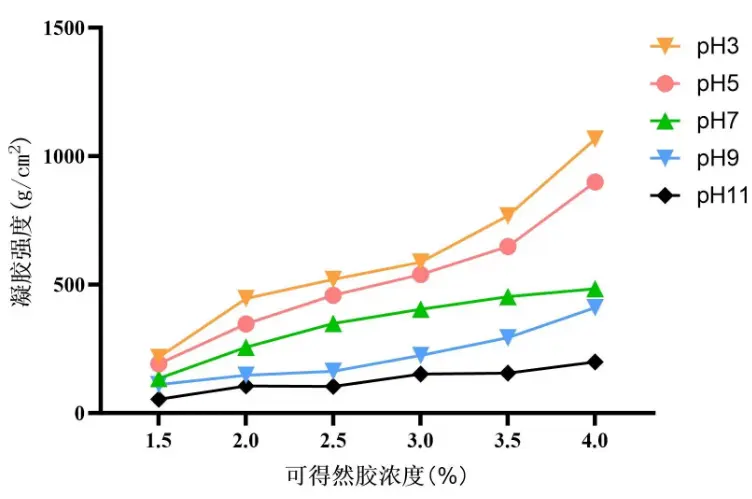
Curdlan samples exhibit higher gel strength at pH 3 and pH 5. Overall, the gel strength under alkaline conditions is lower than that under acidic conditions.
Effects of Different Ions on Gel Properties
Adding KCl and CaCl2 to gellan gum at different concentrations (0.2%, 0.4%, 0.6%, 0.8%, 1.0%) did not significantly promote Curdlan strength.
Although calcium ions do not have a significant synergistic effect with Curdlan, calcium compounds are commonly used in surimi processing to improve gel quality. Under normal pH conditions, the myofibrillar proteins in surimi carry a net negative charge. Positively charged divalent calcium ions can promote the formation of calcium bridges between myofibrillar proteins, enhancing electrostatic interactions. Furthermore, calcium ions can activate endogenous TG enzymes, thereby promoting covalent cross-linking of fish proteins and enhancing surimi gel strength. This provides a reference for practical applications.
Potential Effects
1. Antioxidant effect
It has a strong antioxidant effect, which can remove free radicals and reduce cellular oxidative stress and damage. Studies have shown that its antioxidant activity exceeds that of vitamin C and vitamin E, and has potential for the prevention and treatment of oxidative stress-related diseases.
2. Immunomodulatory effect
It can enhance the function of the immune system, regulate the activity of immune cells and the level of secreted immune factors. They can increase the activity of macrophages, T cells and B cells, promote the synergistic effect of cellular immunity and humoral immunity, and thus enhance the body's resistance to pathogens.
3. Hypoglycemic effect
It has certain therapeutic potential for diabetes, and can reduce blood sugar levels by improving insulin sensitivity, inhibiting intestinal sugar absorption, and reducing liver glycogen synthesis. Studies have shown that some gelatin has a hypoglycemic effect comparable to that of commonly used antidiabetic drugs, and has good safety.
4. Cardiovascular protection effect
It has a certain ability to protect the cardiovascular system, can reduce blood lipids, inhibit platelet aggregation, and regulate endothelial cell function. They can prevent and treat cardiovascular diseases such as hypertension and hyperlipidemia, and reduce the occurrence of cardiovascular and cerebrovascular accidents.
Application Areas
Curdlan has a wide range of applications in the food industry, typically used as a stabilizer, coagulant, thickener, water-retaining agent, and binder in meat processing, pasta products, seafood products, and pre-made products.
Meat and Meat Products
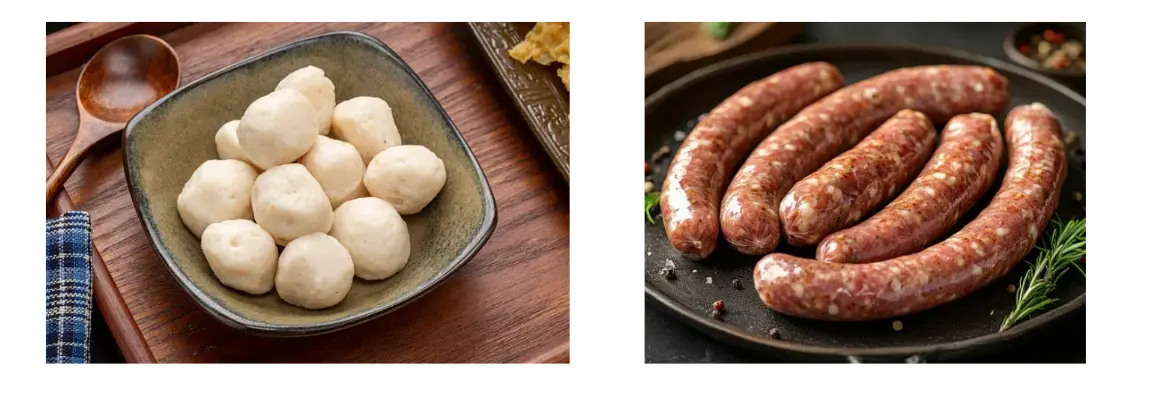
Added to meat products, it can improve water retention, enhance texture, reduce fat, and increase thawing stability.
Small amounts of curdlan fill the large meat protein gel structure, providing stable support and making the gel structure more compact, smooth, and delicate. Simultaneously, curdlan has a significant effect on improving oil and water retention, enhancing sliceability, and reducing the coarse starch texture of products.
Aquatic Products
In normal surimi products, surimi can experience problems such as short shelf life, dehydration, cell collapse, and yellowing during long-term frozen storage due to endogenous enzyme degradation and decreased protein water-binding capacity. The addition of curdlan can improve these problems and enhance the chewiness and texture of the products.
Rice and Flour Products
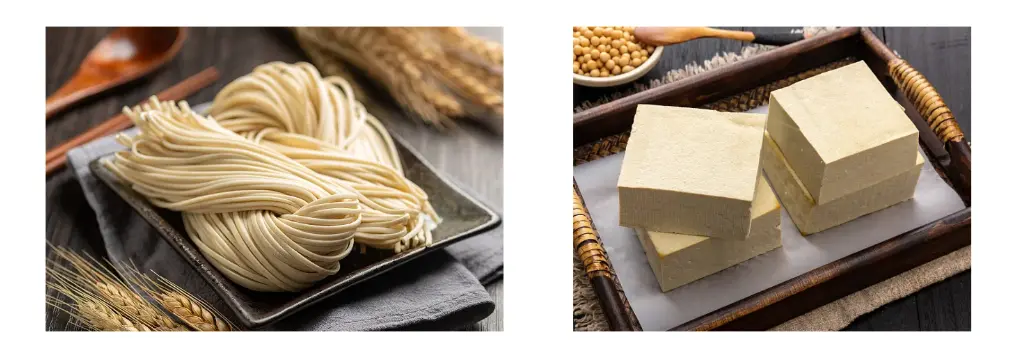
Curdlan improves the toughness and softness of flour products, while also improving their elasticity and chewiness after heating, ultimately enhancing the texture, appearance, and taste of the food.
Soy Products
When applied to soy products, curdlan imparts a delicate and uniform texture, reducing graininess and powderiness; it improves product elasticity, toughness, and slicing ability, improving overall structure; and it enhances the product's resistance to freezing.
Combinations with Other Ingredients
Curdlan + Carrageenan (7:3): Suitable for products requiring high-strength gels.
Curdlan + Xanthan Gum (5:5): Simultaneously improves system stability and shear resistance.
Curdlan + Konjac Gum: Forms a highly elastic, high-toughness composite gel, suitable for fish balls, meatballs, etc.
Processing Points
Temperature Control: Heating to above 80℃ and maintaining this temperature for at least 10 minutes is necessary to form a stable high-temperature gel. Ensure the product's core temperature reaches 80-85℃.
pH Influence: Stable gels can be formed within a pH range of 4-10, suitable for most meat product systems.
Avoid Pre-gelling: Control the material temperature to no more than 40℃ during chopping and mixing to prevent premature gelling and uneven texture.
Contact Us
YTBIO is developing in an all-round way. We have our own factory, quality inspection and R&D team. We are committed to providing customers with the best quality Curdlan powder and services. It is our original intention to let every consumer enjoy high-quality and healthy products. If you have any needs or questions about our products, please feel free to contact us and we will reply you as soon as possible.
Tel:86-029-86478251 / 86-029-86119593
Whatsapp:8617782577059
Email:sales@sxytorganic.com